I first dove Clear Lake, OR
I’m hosting all of my dive briefs on Notion – Clear Lake, OR is found at https://nwlinux.notion.site/clear-lake-or or below as a PDF.
I first dove Clear Lake, OR
I’m hosting all of my dive briefs on Notion – Clear Lake, OR is found at https://nwlinux.notion.site/clear-lake-or or below as a PDF.
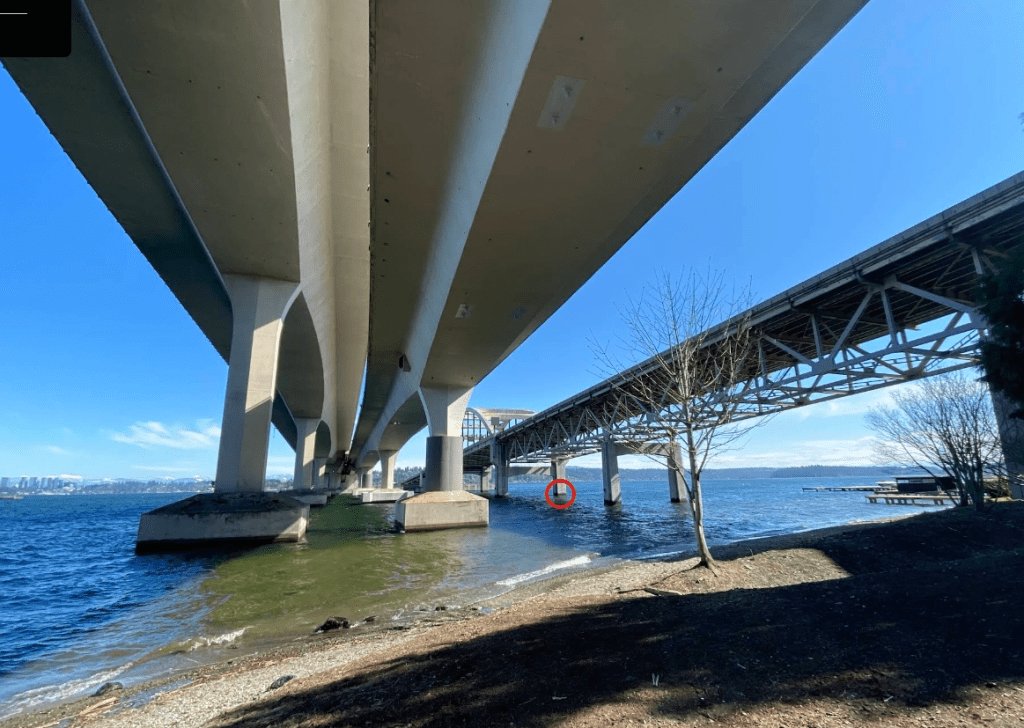
You can view my I-90 Sunken Bridge dive brief on my Notion page at https://nwlinux.notion.site/i-90-sunken-bridge. Within the dive brief and posted below, I have a picture with a red circle around it for the pillar that you’ll need to drop down from in order to find the line. This line takes you to the bridge.
In 1999, the Town of Steilacoom submitted a Statements of Qualifications to design the railroad crossing that separates the parking lot from the beach.

Sunnyside Beach Park has become a popular diving destination known for its underwater attractions and marine environment. The site is particularly appealing because it’s located away from the strong currents of the Tacoma Narrows, ensuring easy diving conditions with plenty to explore.
Abandoned Sewer Pipeline: The main attraction is an abandoned sewer pipeline that runs offshore from the beach, which consistently attracts marine life and serves as the primary underwater feature for divers to explore.
Sunken Vessels and Artificial Features: The site includes several sunken skiffs, underwater lines leading to various submerged items, and even a feature called “Frosty the Snowman”. These artificial features provide additional points of interest for underwater exploration.
Divers can expect to encounter a diverse array of marine life, including:
Depth and Navigation: The pipeline begins at approximately 35-45 feet of water (depending on tide) and continues down a gradual slope to at least 80 feet, with possibilities for deeper exploration. Divers can easily locate the pipeline by setting a compass bearing to 290 degrees from the outdoor shower toward the right side tip of the island across the water.
Visibility: Current conditions show visibility of 15-20 feet in deeper water and 10-15 feet in the shallows. Historical reports indicate visibility can reach up to 20 feet on good days.
Current Conditions: Even during significant tidal exchanges (10-foot range), divers report experiencing almost zero current, making it an ideal site for relaxed diving.
Access: Divers must cross a bridge over railroad tracks and descend steps to reach the beach. The parking lot is a considerable distance from the beach access point, so bringing a wheeled cart is highly recommended to transport gear.
Skill Level: The site is excellent for beginning divers to practice skills, with depths of 20 feet or less within 40 yards of shore.
Safety: A dive flag is highly recommended as boats may pass directly overhead.
Amenities: The park offers excellent facilities including picnic benches, outdoor cold-water rinse showers, bathrooms, playground, covered BBQ area, and restrooms.
Multiple diver reviews consistently praise Sunnyside Beach Park as a relaxing and rewarding dive site. The combination of easy conditions, diverse marine life, interesting artificial features, and excellent park amenities makes it a popular destination for both novice and experienced divers in the Pacific Northwest.
this post was written with Kagi Research Assistant at https://kagi.com/assistant/a58fa9a0-7e3e-4c6b-b300-c84b24787d53.
Prehistoric Era (10,000+ years ago)
The Chambers Creek area has a rich archaeological record showing diverse hunter-gatherer occupation dating back approximately 10,000 years. More recently, the Steilacoom people established their main village, called Ste!le’lqub, at the mouth of Chambers Bay, with settlements extending up both sides of Chambers Creek.
Indigenous Heritage
The Puget Salish-speaking Steilacoom people shared the same language with the nearby Puyallup and Nisqually tribes. The villagers sustained themselves by fishing the creek and bay for salmon, herring, flounder, cod, and perch, while also harvesting shellfish, plants, berries, and acorns, and hunting bear, elk, deer, and waterfowl. The Steilacoom Tribe continues to exist today, led by tribal citizens and their Steilacoom Tribal Council.
European Settlement (1830s)
The Hudson’s Bay Company was responsible for bringing the first known European settlers to the area in the 1830s.. The British trading company established a post at the mouth of nearby Sequalitchew Creek and began acquiring land through the newly established Puget Sound Agricultural Company. They also built more permanent structures that became part of British Fort Nisqually. .
Railroad Era (1890s)
A transformative period came with the arrival of the Tacoma-Steilacoom Railroad in the early 1890s, shortly after Washington became a state. This rail line was essentially a steam-powered streetcar that ran 12 miles along either side of Chambers Creek Canyon from Tacoma to Steilacoom (population 250 at the time), where city folk would recreate in Steilacoom’s hotels and shops. The area between the Nisqually and Puyallup rivers, including Steilacoom village on Chambers Creek, was the center of regional activity.
this post was created by Kagi Research Assistant. The sources and output can be found at https://kagi.com/assistant/a58fa9a0-7e3e-4c6b-b300-c84b24787d53.
 Dive Sunnyside Beach
You must be logged in to post a comment.